|
European Symposium
on Martensitic Transformations
September 9-16, 2012, Saint-Petersburg, Russia
- Important information: Final conference programme is available in "Conference programme"
- Important information: Book of abstract has been added to "Conference Programme"
- Should you have any questions, please contact Dr. Natalia Resnina
-
|
Social Programme
Conference Social Programme will include
Saint-Petersburg Sightseeing tour
One-day excursion to the most beautiful Saint-Petersburg suburb – Peterhof
Accompanying person tour
Get-together party
Conference dinner
Saint-Petersburg Sightseeing tour (duration about 3 hours, September 9)
During this tour following historical places will be visited
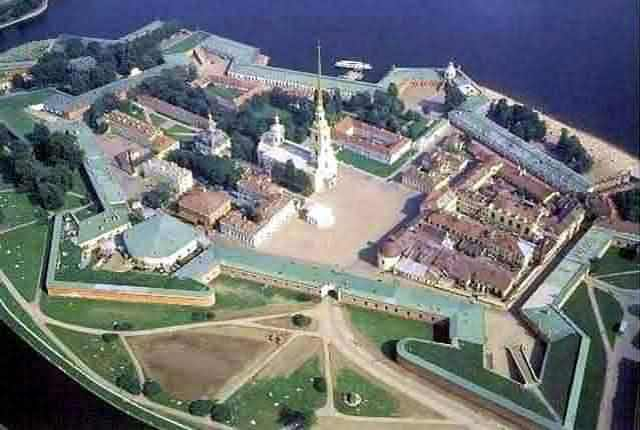 The Peter and Paul Fortress is the historical core of St.-Petersburg. It is a monument of military and engineering craft. It was laid by the order and to the plot-plan of Peter the Great on May 27 1703 on Zayachy Island. The Fortress forms an irregular hexagon stretched from West to East with 6 bastions at the corners. The fortress was constructed "in quite a haste" under supervision of Peter the Great and his closest associates. In 1706-1740 the walls of the fortress that face the Neva River were lined with granite blocks. For the defence of the northern approaches to the Peter and Paul Fortress the Kronverk fortifications were constructed on the southern bank of the Petrogradsky Island. Most worth seeing is the Cathedral of Sts. Peter & Paul, with its landmark needle-thin spire and the weather-vane on top in the form of an Angel with a Cross. The Peter and Paul Fortress is the historical core of St.-Petersburg. It is a monument of military and engineering craft. It was laid by the order and to the plot-plan of Peter the Great on May 27 1703 on Zayachy Island. The Fortress forms an irregular hexagon stretched from West to East with 6 bastions at the corners. The fortress was constructed "in quite a haste" under supervision of Peter the Great and his closest associates. In 1706-1740 the walls of the fortress that face the Neva River were lined with granite blocks. For the defence of the northern approaches to the Peter and Paul Fortress the Kronverk fortifications were constructed on the southern bank of the Petrogradsky Island. Most worth seeing is the Cathedral of Sts. Peter & Paul, with its landmark needle-thin spire and the weather-vane on top in the form of an Angel with a Cross.
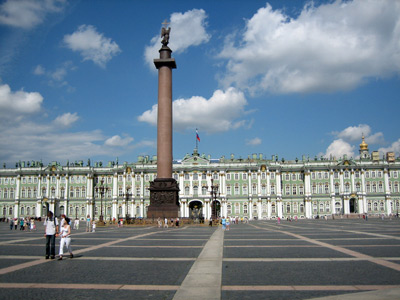 The Palace Square is the most grandiose among the squares of the city. The focal point of its architectural ensemble is the Winter Palace, an architectural masterpiece of the flamboyant Russian Baroque and the royal residence of all the Russian Emperors but Paul. It was built by Bartholomero Rastrelli at the close of the Empress Elizabeth reign, in 1754-1762. He decorated the edge of the roof with huge bronze figures and reduced the emerald wall space to the minimum disguising it by decorative columns and golden tracery, plastic Amours, vases and sculptures. The colossal Alexander Column with the bronze figure of an angel at the top was erected in the centre of the Square in 1834 to commemorate the triumphant victory of the Russians over Napoleon in the Patriotic War 1812. The Palace Square is the most grandiose among the squares of the city. The focal point of its architectural ensemble is the Winter Palace, an architectural masterpiece of the flamboyant Russian Baroque and the royal residence of all the Russian Emperors but Paul. It was built by Bartholomero Rastrelli at the close of the Empress Elizabeth reign, in 1754-1762. He decorated the edge of the roof with huge bronze figures and reduced the emerald wall space to the minimum disguising it by decorative columns and golden tracery, plastic Amours, vases and sculptures. The colossal Alexander Column with the bronze figure of an angel at the top was erected in the centre of the Square in 1834 to commemorate the triumphant victory of the Russians over Napoleon in the Patriotic War 1812.
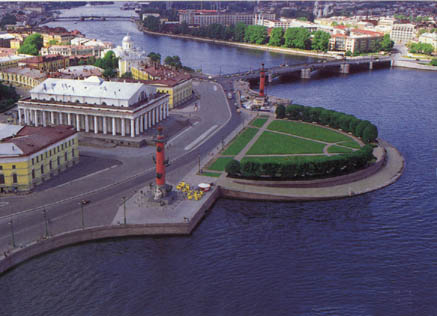 The cape of Basil Island (Vasilievsky Island) is called a Strelka (Tongue of the Land) because it sticks out into the Neva River and divides it into two estuaries. The spot ranks as one of the most prominent architectural sights in Saint-Petersburg. The two almost a hundred feet high redbrick. Rostral Columns raised n 1810 and designed by an architect Tomas de Tomon as a symbol of the naval supremacy of the Russian Empire and in honour of the Russian fleet victories. The shafts of the columns are decorated with the sculptural images of bows (rostra) of enemy ships. The five metre high allegoric statues installed at the foot of each column embody the four main Russian northern rivers: the Volga, the Dnieper, the Neva and the Volhov. The cape of Basil Island (Vasilievsky Island) is called a Strelka (Tongue of the Land) because it sticks out into the Neva River and divides it into two estuaries. The spot ranks as one of the most prominent architectural sights in Saint-Petersburg. The two almost a hundred feet high redbrick. Rostral Columns raised n 1810 and designed by an architect Tomas de Tomon as a symbol of the naval supremacy of the Russian Empire and in honour of the Russian fleet victories. The shafts of the columns are decorated with the sculptural images of bows (rostra) of enemy ships. The five metre high allegoric statues installed at the foot of each column embody the four main Russian northern rivers: the Volga, the Dnieper, the Neva and the Volhov.
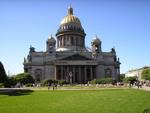 The St.Isaac Square got its name from the magnificent St.Isaac Cathedral, located in its centre, that is dominating building linking with the Decembrist Square. It is the biggest Orthodox Cathedral in St.Petersburg. The history of the construction began in 1710, when the first small wooden church was put up in honor of St.Isaac of Dalmatia, which was the patron saint of the Romanov family. In the early 19th century a contest was arranged for the best project of a new cathedral, in which the most well-known architects took part. In 1818 Alexander I approved a project submitted by Ogust Montferrand, a talented drawer who had just arrived from Paris; however, he had had but little experience in architecture. The building process lasted so long that people made fun of the architect saying that Montferrand dragged it on because a prophet had predicted him he would die the day the Cathedral was completed. The St.Isaac Square got its name from the magnificent St.Isaac Cathedral, located in its centre, that is dominating building linking with the Decembrist Square. It is the biggest Orthodox Cathedral in St.Petersburg. The history of the construction began in 1710, when the first small wooden church was put up in honor of St.Isaac of Dalmatia, which was the patron saint of the Romanov family. In the early 19th century a contest was arranged for the best project of a new cathedral, in which the most well-known architects took part. In 1818 Alexander I approved a project submitted by Ogust Montferrand, a talented drawer who had just arrived from Paris; however, he had had but little experience in architecture. The building process lasted so long that people made fun of the architect saying that Montferrand dragged it on because a prophet had predicted him he would die the day the Cathedral was completed.
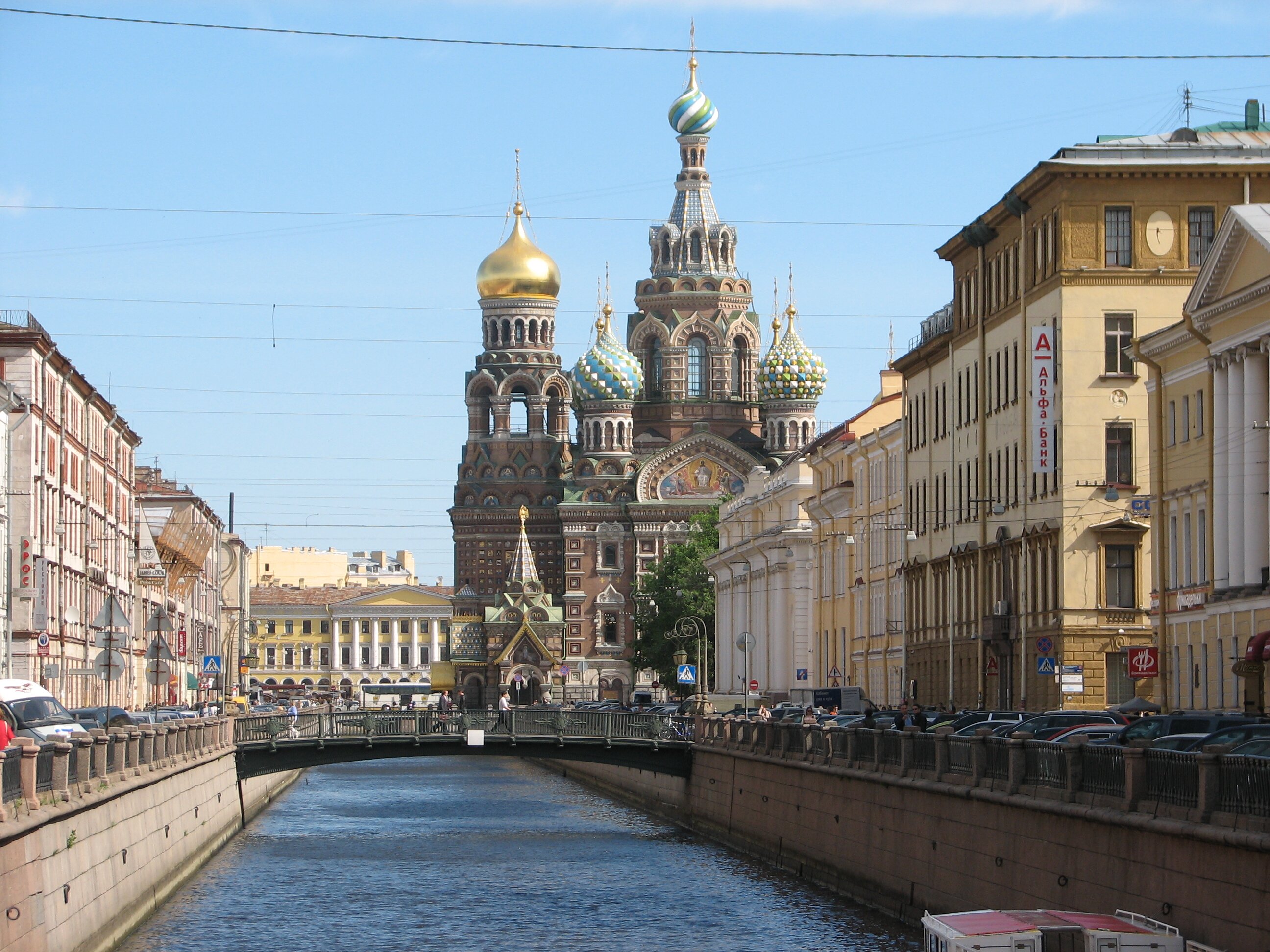 "The Resurrection Church" marvelous Russian-style multicolored, onion-domed church was built on the spot where Emperor Alexander II was assassinated in March 1, 1881. On this site a terrorist Grinevitsky, a member of the revolutionary organization People's Will, mortally wounded Tsar, by tossing a bomb at his royal carriage. In 1883 a son of Alexander II, Alexander III, began the construction of a memorial church and it was completed in 1907 during the reign of Nicholas II. The church resembles Church of St.Basil the Blessed (Pokrovsky Cathedral), located on the Red Square in Moscow and its flamboyant Russian style can be attributed to a rise in national consciousness on the turn of the century. "The Resurrection Church" marvelous Russian-style multicolored, onion-domed church was built on the spot where Emperor Alexander II was assassinated in March 1, 1881. On this site a terrorist Grinevitsky, a member of the revolutionary organization People's Will, mortally wounded Tsar, by tossing a bomb at his royal carriage. In 1883 a son of Alexander II, Alexander III, began the construction of a memorial church and it was completed in 1907 during the reign of Nicholas II. The church resembles Church of St.Basil the Blessed (Pokrovsky Cathedral), located on the Red Square in Moscow and its flamboyant Russian style can be attributed to a rise in national consciousness on the turn of the century.
The original name of the square is Senat's Square, because there are the yellow and white buildings of a former Senat and Sinod, built in 1834 by Karlo Rossy. The Senat was the highest legislative body under the tsar and the Sinod was the main governing body of the Church. Now it houses the Central Historical Archives. The most famous and impressive monument to the founder of St.Petersburg, Peter the Great, the Bronze Horseman, in the middle of the Square is the first monument in the city. The monument was built by order of the Empress Catherine the Great as a tribute to her famous predecessor on the Russian throne, Peter the Great. Being a German princess by birth, she was eager to establish a line of continuity with the earlier Russian monarchs. For that reason an inscription on the monument reads in Latin and Russian: Petro Primo Catarina Secunda - To Peter the First from Catherine the Second.
The Nevskiy prospect, Art Square, Russian Museum, Mikhail Castle, Summer Garden with Summer palace of Peter the First, Kazan Cathedral, embankments of the Neva river, small rivers and channels and most popular bridges (Lion Bridge, Bank Bridge, Singing Bridge, Blue Bridge, Palace Bridge, Exchange bridge) and many other historical places will be attended during excursion.
One-day excursion to Peterhof (September 13)
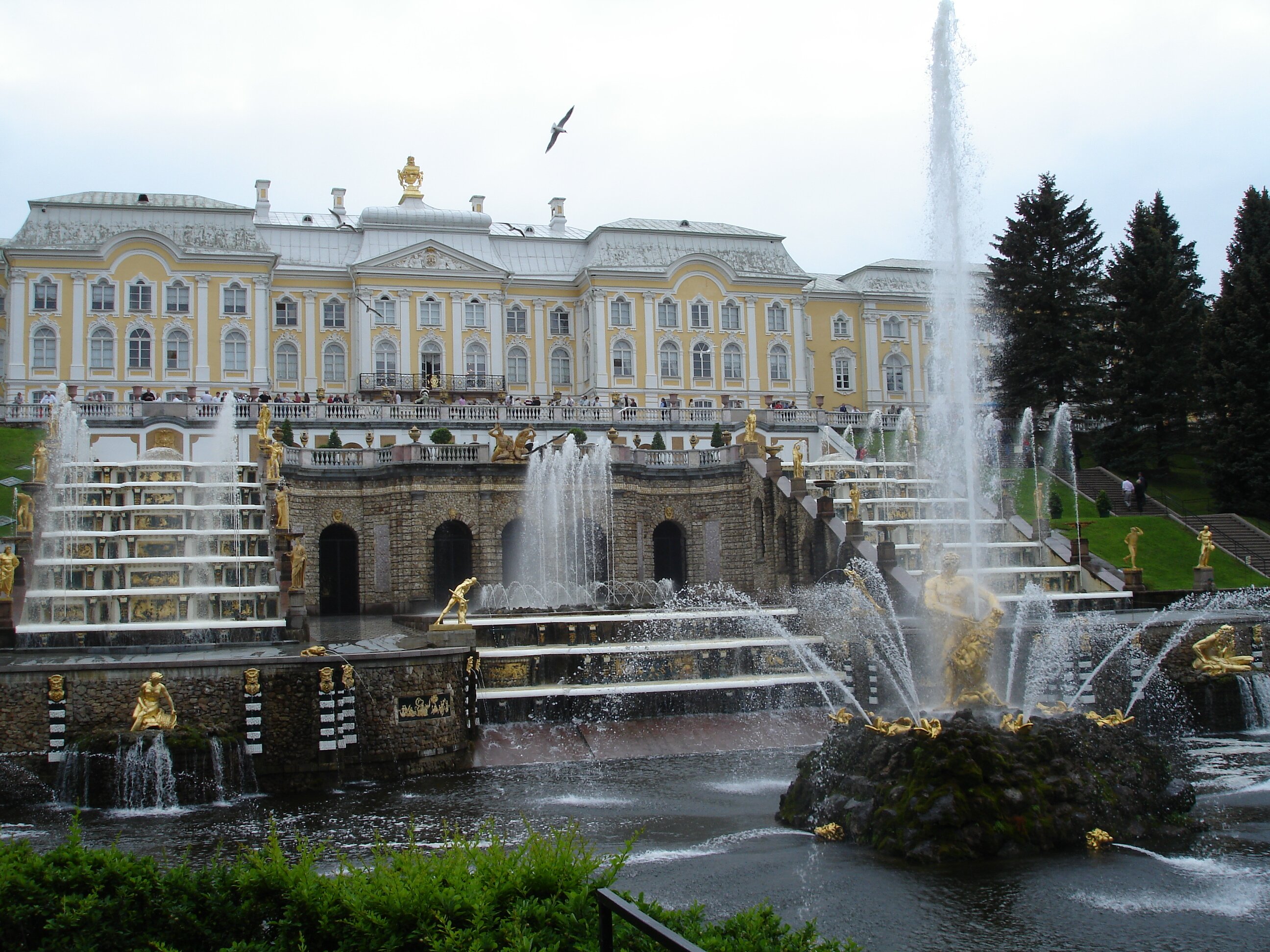 One of St.-Petersburg's most famous and popular visitor attractions, the palace and park at Peterhof (also known as Petrodvorets) are often referred to as "the Russian Versaille", although many visitors conclude that the comparison does a disservice to the grandeur and scope of this majestic estate. Versailles was, however, the inspiration for Peter the Great's desire to build an imperial palace in the suburbs of his new city and, after an aborted attempt at Strelna, Peterhof - which means "Peter's Court" in German - became the site for the Tsar's Monplaisir Palace, and then for the original Grand Palace. The estate was equally popular with Peter's daughter, Empress Elizabeth, who ordered the expansion of the Grand Palace and greatly extended the park and the famous system of fountains, including the truly spectacular Grand Cascade. One of St.-Petersburg's most famous and popular visitor attractions, the palace and park at Peterhof (also known as Petrodvorets) are often referred to as "the Russian Versaille", although many visitors conclude that the comparison does a disservice to the grandeur and scope of this majestic estate. Versailles was, however, the inspiration for Peter the Great's desire to build an imperial palace in the suburbs of his new city and, after an aborted attempt at Strelna, Peterhof - which means "Peter's Court" in German - became the site for the Tsar's Monplaisir Palace, and then for the original Grand Palace. The estate was equally popular with Peter's daughter, Empress Elizabeth, who ordered the expansion of the Grand Palace and greatly extended the park and the famous system of fountains, including the truly spectacular Grand Cascade.
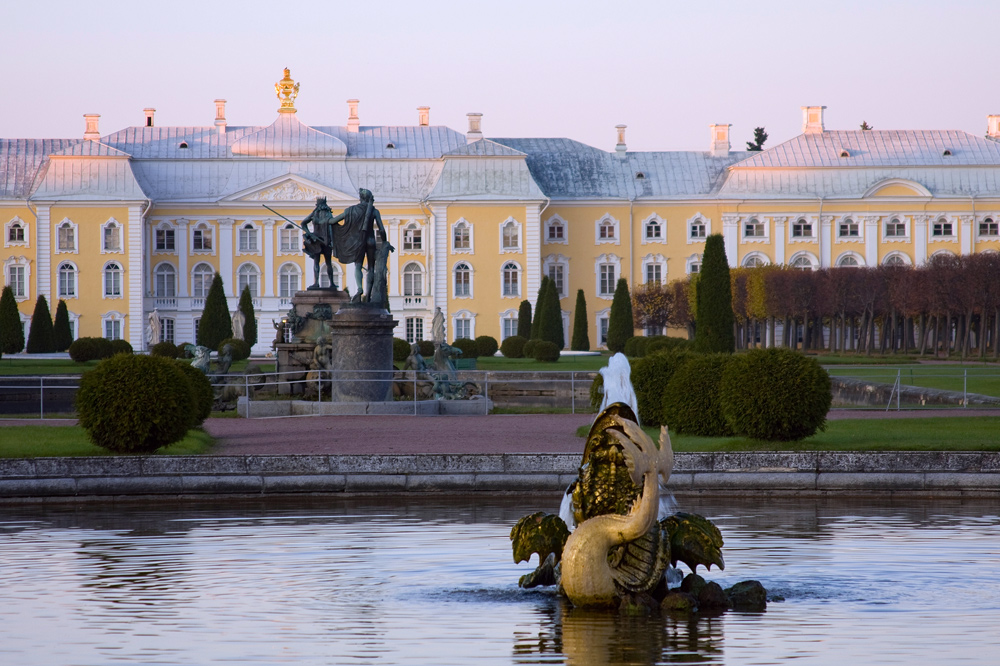 The Grand Palace at Peterhof was designed to be the centerpiece of Peter the Great's "Russian Versaille". Around 1720, the Tsar gave up on attempts to establish his court at Strelna, mainly because the boggy ground proved entirely unsuitable for the canals and fountains that he envisioned. Moving his attentions further east to Peterhof, the Tsar began to draw up his own plans for the grounds and palace. Work had already begun on a modest palace, designed by Jean-Baptiste Le Blond, in 1714, and that building was completed in 1721. The Grand Palace at Peterhof was designed to be the centerpiece of Peter the Great's "Russian Versaille". Around 1720, the Tsar gave up on attempts to establish his court at Strelna, mainly because the boggy ground proved entirely unsuitable for the canals and fountains that he envisioned. Moving his attentions further east to Peterhof, the Tsar began to draw up his own plans for the grounds and palace. Work had already begun on a modest palace, designed by Jean-Baptiste Le Blond, in 1714, and that building was completed in 1721.
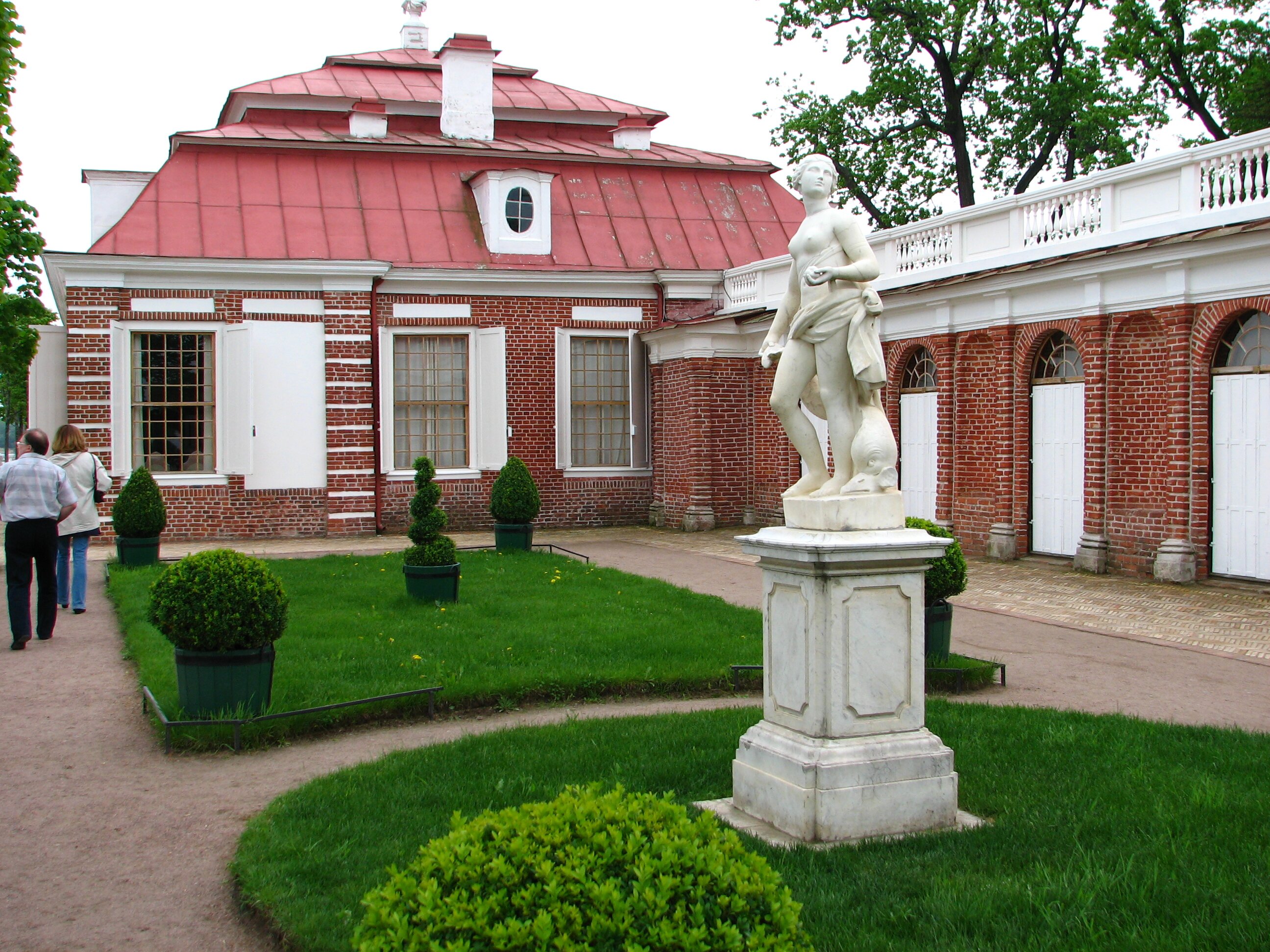 The spectacular parkland at Peterhof is remarkable for the sheer variety of styles encompassed in its layout and features. Representing nearly two centuries of European aristocratic fashion executed to the highest standards, Peterhof is like an encyclopedia of park design through the age of empire. Particularly impressive is the fact that the master landscapers and garden designers who worked on the estate at Peterhof managed to overcome the extremely inclement conditions of the northern climate to create a wonderland of greenery and flowers, sweeping vistas and ornate architectural decorations. The spectacular parkland at Peterhof is remarkable for the sheer variety of styles encompassed in its layout and features. Representing nearly two centuries of European aristocratic fashion executed to the highest standards, Peterhof is like an encyclopedia of park design through the age of empire. Particularly impressive is the fact that the master landscapers and garden designers who worked on the estate at Peterhof managed to overcome the extremely inclement conditions of the northern climate to create a wonderland of greenery and flowers, sweeping vistas and ornate architectural decorations.
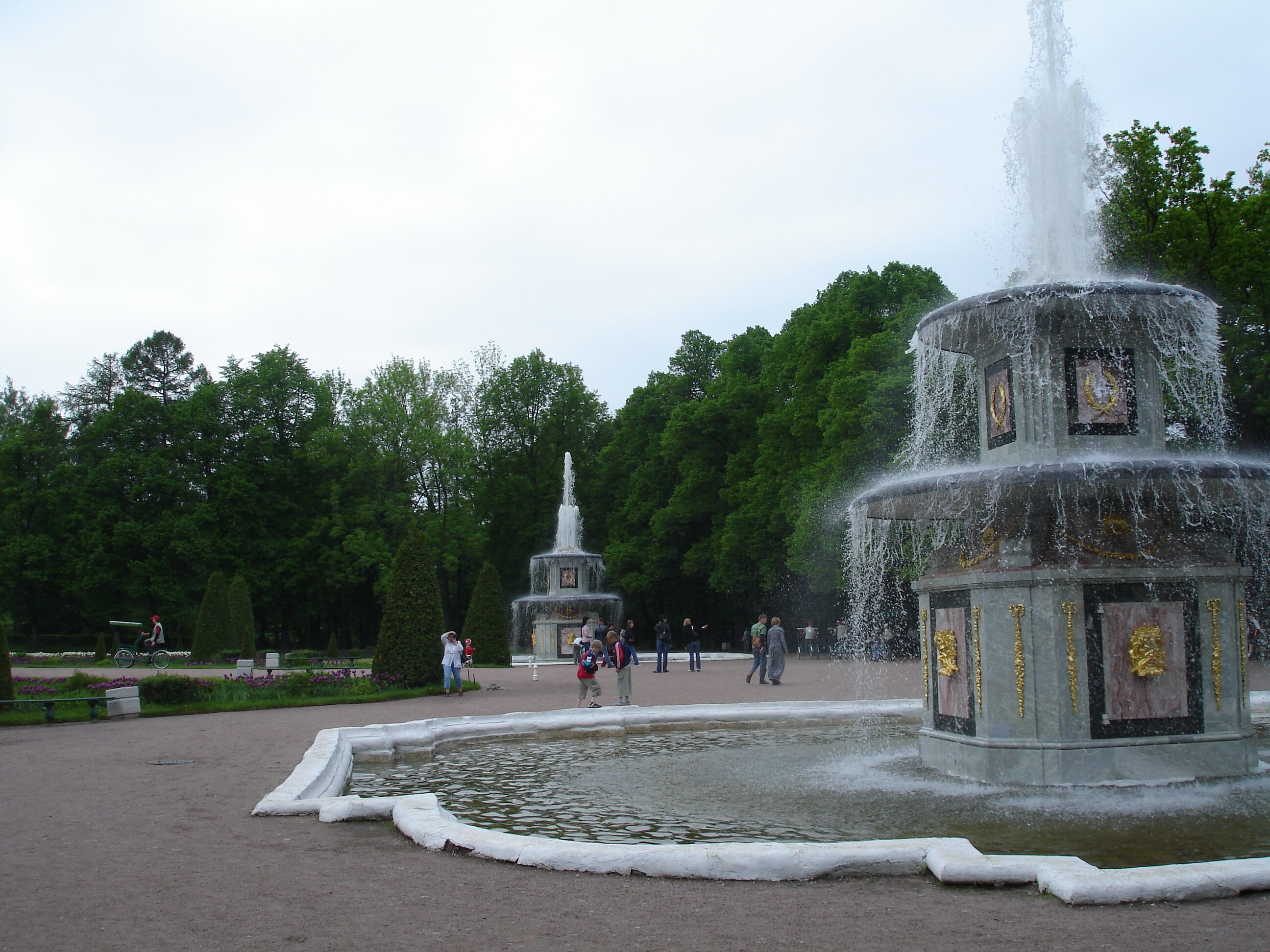 The fountains of Peterhof are one of Russia's most famous tourist attractions, drawing millions of visitors every year. Fountains were intrinsic to Peter the Great's original plans for Peterhof - it was the impossibility of engineering sufficiently powerful jets of water that prompted him to move his attentions from the Strelna site to Peterhof - and subsequent generations competed with their predecessors to add grander and ever more ingenious water features to the parkland surrounding the Grand Palace. The most famous ensemble of fountains, the Grand Cascade, which runs from the northern facade of the Grand Palace to the Marine Canal, comprises 64 different fountains, and over 200 bronze statues, bas-reliefs, and other decorations. At the centre stands Rastrelli's spectacular statue of Samson wrestling the jaws of a lion. The vista of the Grand Cascade with the Grand Palace behind it, the first sight to great visitors who arrive in Peterhof by sea, is truly breathtaking. The Grotto behind the Grand Cascade, which was once used for small parties, contains the enormous pipes, originally wooden, that feed the fountains. The fountains of Peterhof are one of Russia's most famous tourist attractions, drawing millions of visitors every year. Fountains were intrinsic to Peter the Great's original plans for Peterhof - it was the impossibility of engineering sufficiently powerful jets of water that prompted him to move his attentions from the Strelna site to Peterhof - and subsequent generations competed with their predecessors to add grander and ever more ingenious water features to the parkland surrounding the Grand Palace. The most famous ensemble of fountains, the Grand Cascade, which runs from the northern facade of the Grand Palace to the Marine Canal, comprises 64 different fountains, and over 200 bronze statues, bas-reliefs, and other decorations. At the centre stands Rastrelli's spectacular statue of Samson wrestling the jaws of a lion. The vista of the Grand Cascade with the Grand Palace behind it, the first sight to great visitors who arrive in Peterhof by sea, is truly breathtaking. The Grotto behind the Grand Cascade, which was once used for small parties, contains the enormous pipes, originally wooden, that feed the fountains.
Elsewhere in the park, the range and diversity of fountains is astounding, from further monumental ensembles like the Chess Cascade and the Pyramid Fountain, to the ever-popular Joke Fountains, including one which sprays unwary passers-by who step on a particular paving stone.
Accompanying person tour
Conference fee for accompanying person
Description of types of participations of accompanying persons:
Full participation includes Social Programme
Excursion Programme 1. September, 10. Monday 9:30-12:30 – visit of Russian museum. 12:30-14:00 – Lunch. 14:00-17:00 – visit of Alexander Nevsky Lavra, 2. September, 11. Tuesday 9:30-12:30 – visit of Yusupov Palace 13:00 – Lunch. 14:00 – visit of Hermitage Museum. 3. September, 12. Wednesday 9:30 – visit of Peter and Paul Fortress + visit of «Aurora» cruiser 12:00-13:00 – Lunch 14:00-18:00 –Boat trip 4. September, 14, Friday 9:30-13:00 – visit of Kazansky Cathedral +visit of metro + shopping. Please, see the description of excursion programme here
Social participation includes
Excursion particiaption includes Excursion Programme 1. September, 10. Monday 9:30-12:30 – visit of Russian museum. 12:30-14:00 – Lunch. 14:00-17:00 – visit of Alexander Nevsky Lavra, 2. September, 11. Tuesday 9:30-12:30 – visit of Yusupov Palace 13:00 – Lunch. 14:00 – visit of Hermitage Museum. 3. September, 12. Wednesday 9:30 – visit of Peter and Paul Fortress + visit of «Aurora» cruiser 12:00-13:00 – Lunch 14:00-18:00 –Boat trip 4. September, 14, Friday 9:30-13:00 – visit of Kazansky Cathedral +visit of metro + shopping
Please, see the description of excursion programme here
Get-together party (September 9)
Get-together party will be organized in Hotel “Holiday Inn Moskovskye Vorota”
Conference dinner (September 13)
Conference dinner will be in Restaurant “Podvorie”
Optional Programme
The company "Favorit" is very glad to offer you the following excursions in the period of September 11 to September 15. Please pay attention to these excursions are not covered by conference fee. Please download this file with costs and descriptions of the additional excursions. If you are going to visit these additional excursions please fill in the form for optional programme and send it to company Favorit directly by e-mail: before August 1. |


